

There is a particular rhythm to life in a big city. It begins early, often before the streets are fully awake, and continues through a constant movement of people, vehicles, lights and voices. Somewhere between home and work, millions of small journeys take place every day.
The metro is one of the places where this rhythm becomes most visible. People descend underground, disappear into tunnels and emerge somewhere else minutes later. For some, it is simply a practical way to get from one place to another. For others, it becomes a quiet moment between two parts of the day.
A Few Minutes Between Places
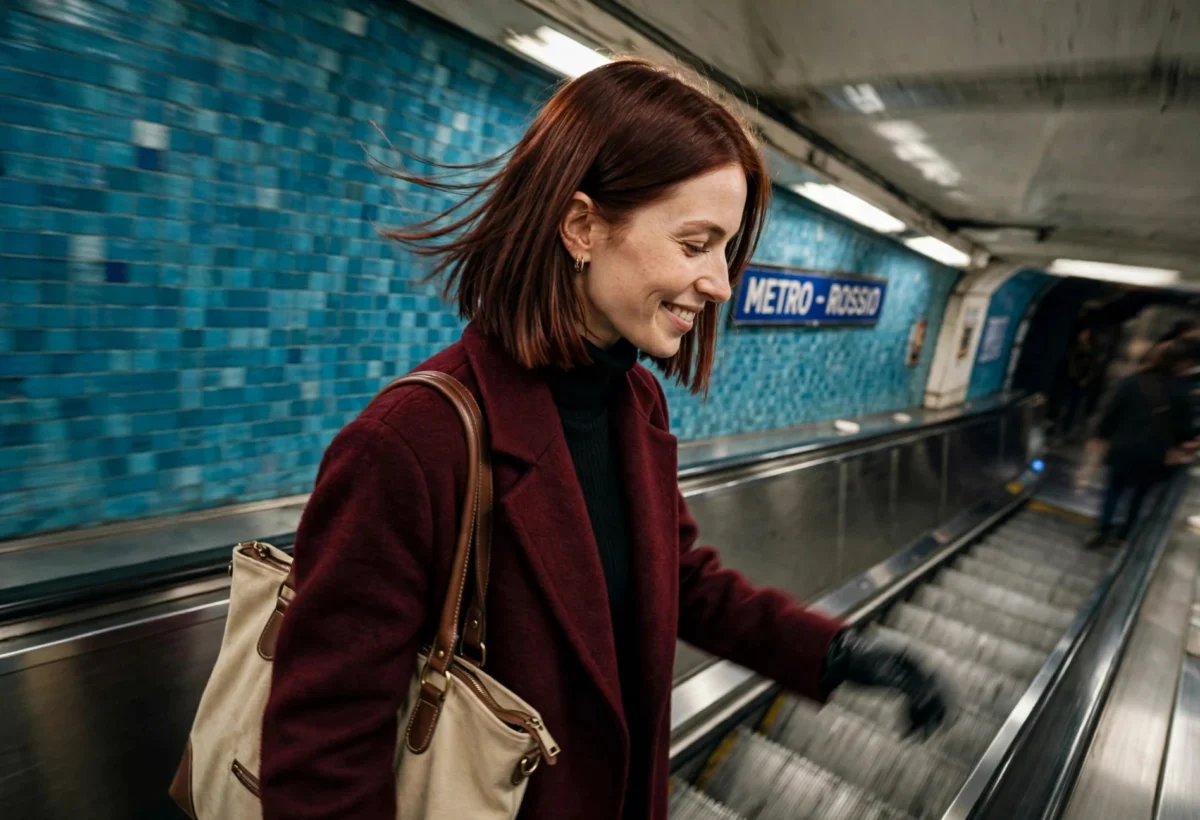
The escalator creates a strange kind of pause. Everyone is moving, yet almost nobody is really going anywhere for a few moments. Some passengers look at their phones, others listen to music, while others simply watch the city pass through a sequence of tiled walls, fluorescent lights and blurred figures.
These ordinary moments rarely make the headlines, but they reveal something essential about urban life: the city is experienced through countless small transitions.
Everyday Style
There is also a subtle relationship between fashion and public space. Coats, bags, shoes and small personal details become part of the visual language of the city. Unlike a carefully staged studio photograph, the metro captures people as they actually move through their day.
The result is an accidental kind of street photography—unplanned, imperfect and deeply connected to the atmosphere of the place.
Life in Motion
Perhaps that is what makes the daily commute so interesting. It is repetitive, but never exactly the same. The people change, the light shifts, conversations begin and end, and every journey produces a slightly different version of the same city.
For a few minutes, strangers share the same direction before disappearing into their own lives again.
That constant movement is not just transportation. It is one of the quietest portraits of contemporary urban life.