


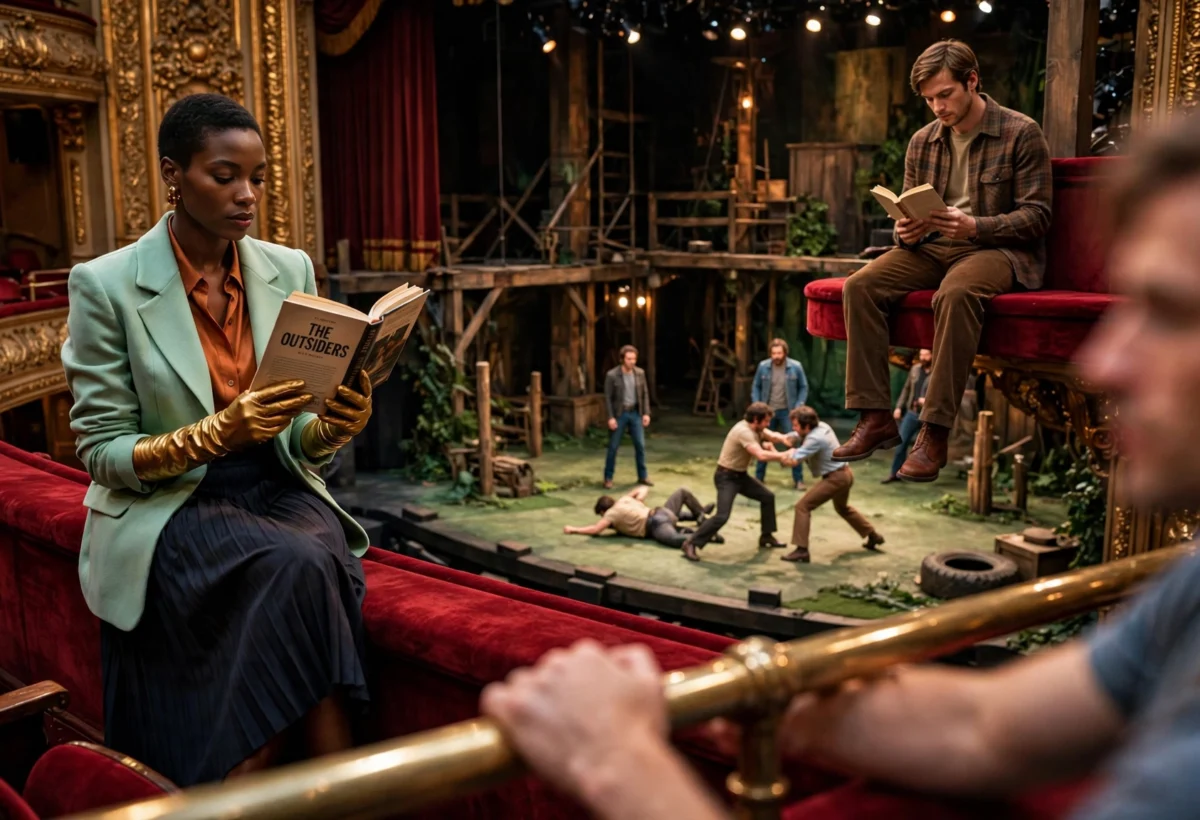
In the realm of performing arts and editorial culture, historic theater spaces serve as timeless backdrops where literature, stage production, and quiet audience contemplation merge. Seated along a plush, red velvet balcony balcony in an ornate historic theater, a stylishly dressed woman wearing a mint green blazer and gold gloves reads a copy of “THE OUTSIDERS”. High above on an elevated red seating ledge, a man quietly focuses on his own book, while below on the lit stage, actors engage in a dynamic physical performance surrounded by rustic set pieces.
This captivating composition highlights the multilayered narrative experience of theatrical art. Every element—from the gilded architectural details and crimson velvet upholstery to the contrast between serene balcony readers and energetic stage action—demonstrates how classic performance spaces evoke intellectual and visual depth. Whether exploring literary adaptations or examining the spatial dynamics of classical theater interiors, scenes like this celebrate the enduring power of stagecraft and visual storytelling.
The Intersection of Stage and Page
When analyzing the cultural atmosphere of traditional theater spaces, the interaction between literary source material and live performance creates a rich artistic dialogue. The quiet immersion of balcony spectators contrasted with the raw movement on stage invites viewers to appreciate theater as a multifaceted, living narrative. By capturing refined fashion, classical architecture, and dynamic stagecraft within a single frame, storytellers honor the timeless magic of dramatic performance.