

Before playlists and recommendation algorithms turned music into something almost invisible, discovering a record meant searching for it.
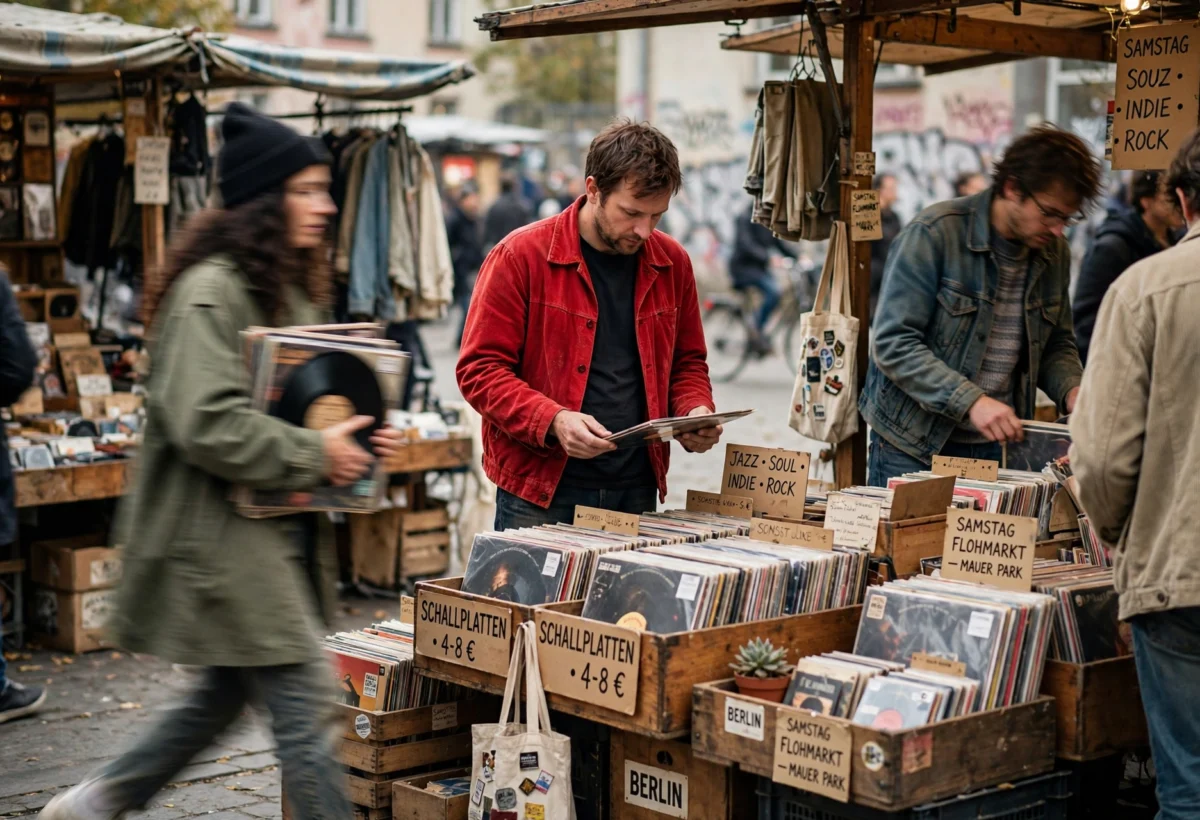
You had to walk into a shop, browse through shelves, read faded labels and judge an album by its cover. Flea markets keep a small part of that experience alive. In places like Berlin’s Mauerpark, music is still something you can hold, examine and take home.
Rows of vinyl records sit inside old wooden crates, surrounded by clothes, books, posters and objects with their own histories. The atmosphere feels less like shopping and more like wandering through a constantly changing archive.
The Pleasure of Searching
Record collecting has never been entirely about finding a particular album. Much of the pleasure comes from not knowing what you will discover.
A familiar artist might appear between two forgotten records. An unusual cover can catch someone’s attention. A handwritten price tag or a worn sleeve can tell a story before the music has even been heard.
That element of chance is something digital platforms struggle to reproduce.
Berlin’s Independent Rhythm
Berlin has long cultivated a relationship with independent music, alternative culture and second-hand objects. Its flea markets reflect that character. Vinyl records sit alongside vintage clothing, handmade goods and fragments of everyday life.
The result is an environment where music becomes part of the visual landscape of the city.
A record is no longer just a recording. It becomes an object, a memory and sometimes a small piece of personal identity.
An Archive That Keeps Moving
The most interesting thing about a flea market may be that nothing stays there for long. A record that has been sitting inside a crate for months can suddenly disappear into someone’s collection. Another one arrives to take its place.
In that sense, these markets function as living archives—constantly changing, slightly chaotic and impossible to completely catalogue.
In an age when almost every song is available with a tap, the act of searching for music may be becoming valuable again.