

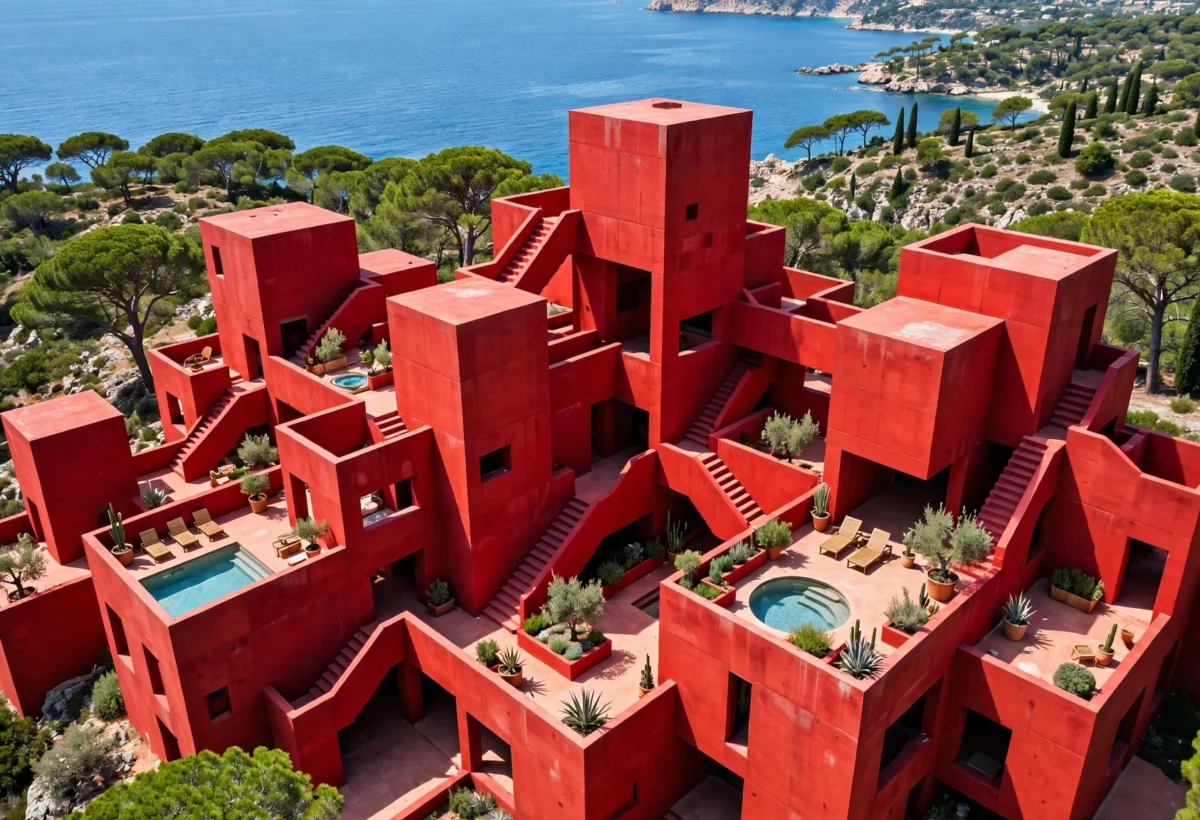
In the realm of contemporary architectural design and coastal landscape planning, striking geometric structures create a profound visual dialogue with nature. Perched dramatically on a lush cliffside overlooking deep blue coastal waters, a sprawling complex of vibrant red-painted cubic buildings features interlocking stairs, roof terraces, built-in swimming pools, and minimalist green planters. The bold monochromatic red facade stands in breathtaking contrast against the surrounding pine trees, rugged terrain, and open sea.
This captivating aerial composition highlights the enduring influence of modernist and postmodern architectural philosophies. Every element—from the precise labyrinthine staircases and sunlit patios to the organic integration of plant life and water features—demonstrates how built structures can redefine coastal topography. Whether exploring iconic architectural landmarks or analyzing the relationship between color, form, and environment, architecture like this celebrates the peak of spatial innovation.
The Geometry of Coastal Landscapes
When analyzing the visual impact of color and massing in architectural design, monochromatic structures placed against natural backdrops evoke a powerful sense of surrealism and order. The interplay of light and shadow across the red cubic volumes throughout the day transforms the complex into an ever-shifting sculpture. By blending structural rigor with coastal beauty, architects forge spaces that are at once monumental and intimately connected to their natural horizon.