

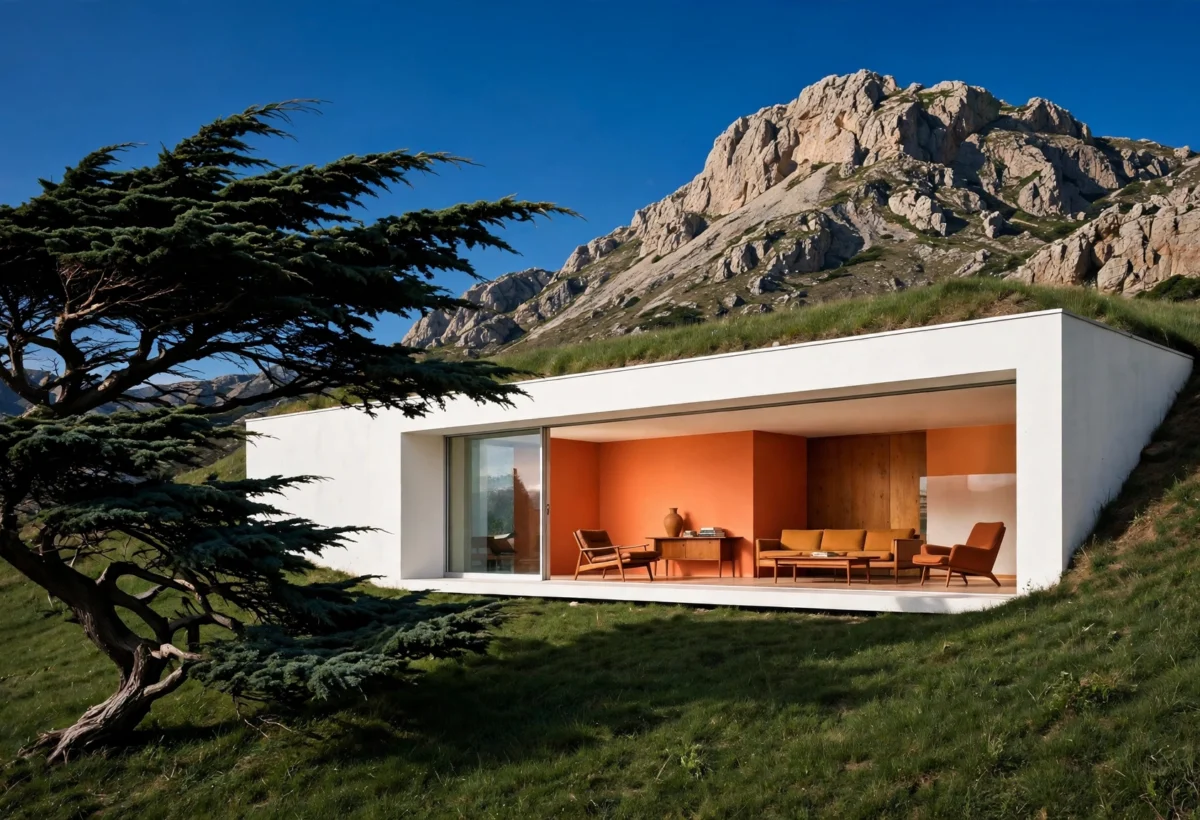
In the realm of contemporary architectural design, structures that seamlessly integrate into their natural topography represent a harmonious dialogue between human habitation and the earth. Captured against a dramatic mountainous backdrop under a clear blue sky, a minimalist concrete dwelling is artfully embedded into a verdant green slope. The open facade reveals a warm, terracotta-toned interior lounge furnished with mid-century modern seating, contrasting beautifully with the rugged alpine environment and a windswept cedar tree in the foreground.
This striking composition highlights the principles of earth-sheltered architecture and environmental design. Every element—from the clean white structural lines and large sliding glass panels to the green roof blending into the hillside—demonstrates how thoughtful design can respect and enhance natural landscapes. Whether exploring innovative housing concepts or examining the interplay between modern interiors and raw geography, architecture like this celebrates the timeless connection between shelter and nature.
The Harmony of Topography and Structure
When analyzing the impact of modern architecture on remote topographies, the concept of building into rather than on the landscape takes precedence. The subterranean integration of living spaces optimizes thermal mass while preserving the sweeping visual continuity of the mountain range. By combining minimalist geometry with organic surroundings, architects achieve an enduring balance of luxury, sustainability, and aesthetic restraint.