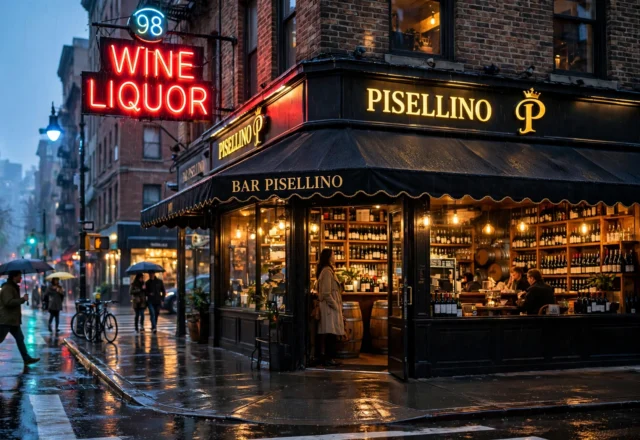


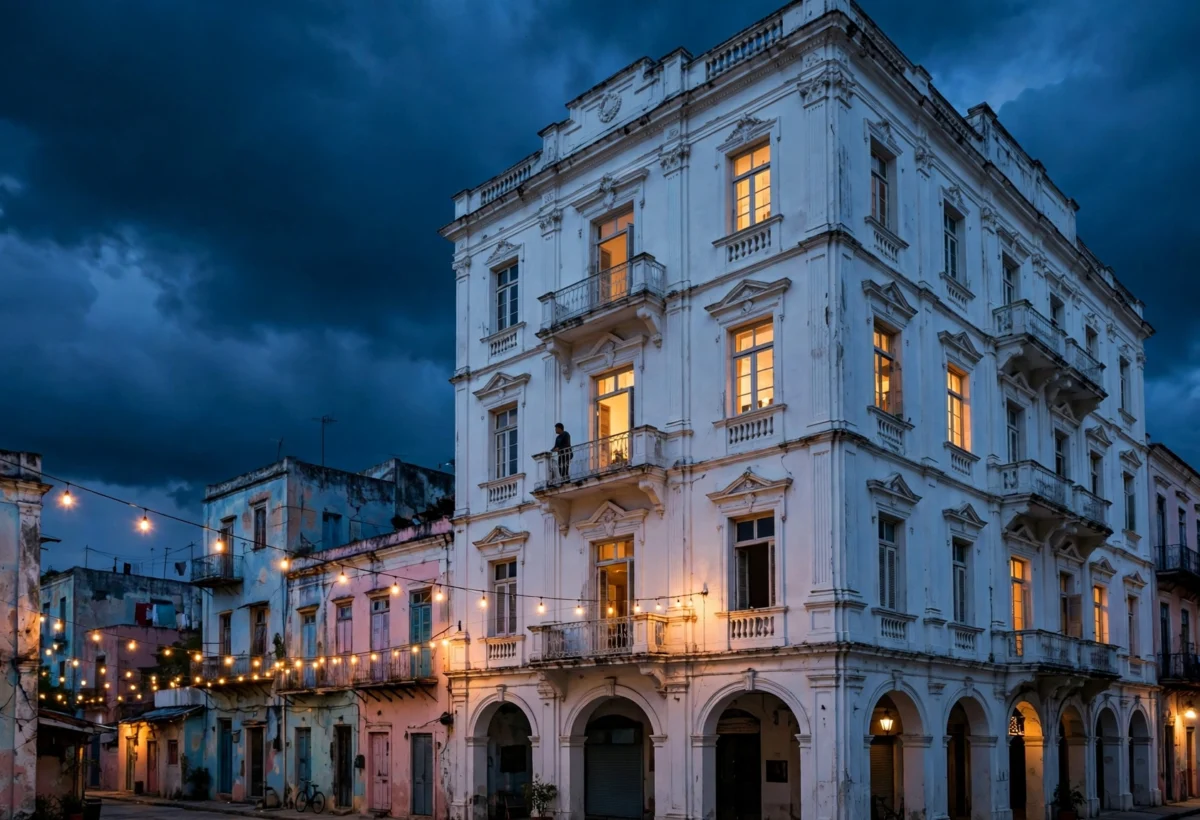
There is a profound transformation that occurs in urban environments as daylight fades and the deep indigo of twilight takes over the sky. Historic architecture, often muted under the harsh glare of midday sun, gains a cinematic and almost theatrical quality when illuminated by warm interior lights and glowing string lanterns strung across narrow streets. Standing beneath the grand, neoclassical facade of a multi-story corner building, one can appreciate how urban design shapes human emotion after dark. The tall windows casting golden rays, the delicate iron balconies, and the rhythmic arches at street level weave a visual tapestry of heritage, resilience, and timeless elegance.
This interplay between shadow and light highlights the true soul of historic city quarters. As evening settles in, buildings cease to be mere structures of stone and mortar; they become living characters in the city’s nightly narrative. The contrast of the moody, dramatic clouds above with the welcoming warmth of street-level illumination invites both residents and wanderers to pause and reflect on the beauty of urban spaces. It is an exploration of architecture as a storyteller, where every lit window and arched entryway whispers secrets of the city’s past and present.
The Poetry of Urban Evening Spaces
When we examine the architecture of historic neighborhoods, nightfall reveals details that daylight often conceals. The geometry of cornices, balconies, and colonnades stands out sharply against the deepening dusk, creating an atmosphere of quiet mystery. Designing and appreciating these spaces goes beyond structural aesthetics—it is about capturing an emotional mood. When cities embrace warm lighting and preserve their historical integrity, they create urban landscapes that feel both intimately personal and universally captivating.