

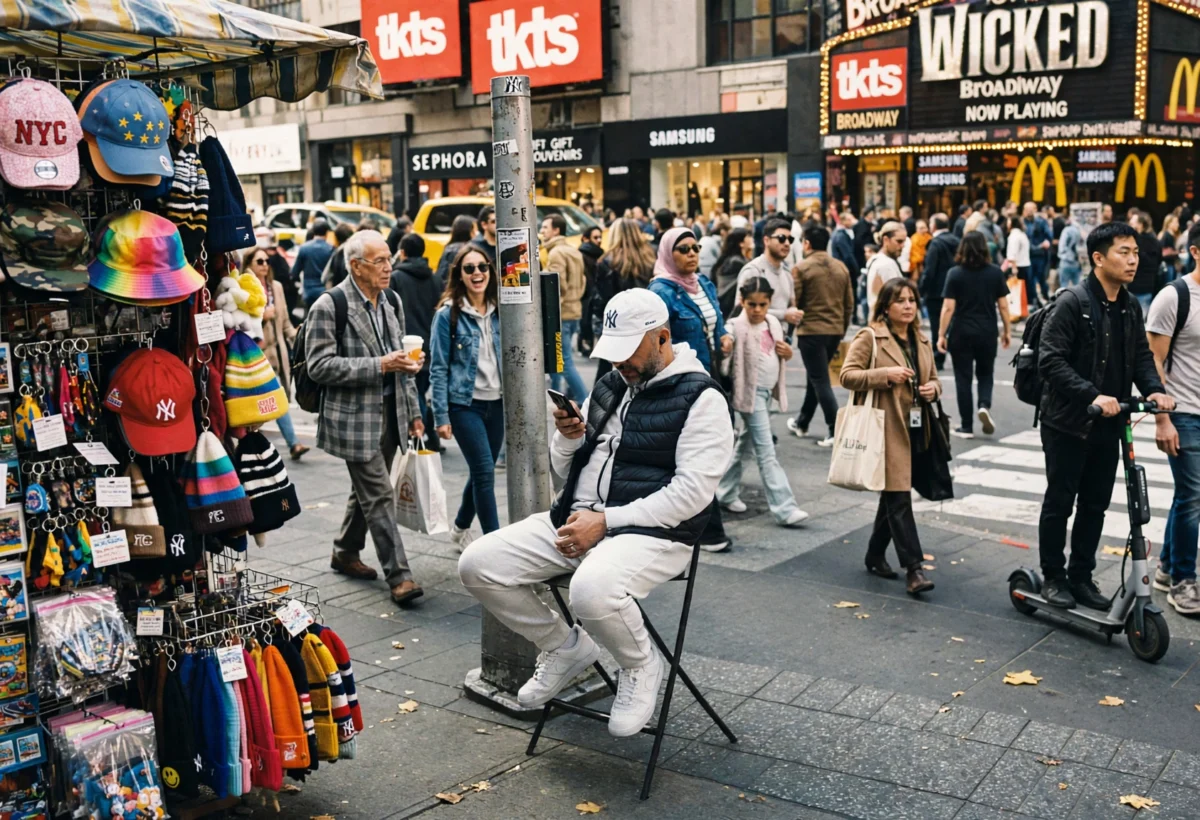
There is a fascinating paradox at the heart of major global metropolises: the coexistence of overwhelming, kinetic energy and moments of profound personal isolation. In bustling urban epicenters like New York’s Times Square, surrounded by towering neon billboards, glowing marquee signs for Broadway shows, and a relentless tide of pedestrians, people navigate daily life in their own unique bubbles. A vendor’s stand overflowing with colorful caps, souvenirs, and winter knits sits just steps away from a commuter absorbed in a smartphone screen while resting on a folding chair. It is a cinematic tapestry of urban survival, where every face tells a different story of ambition, routine, and escape.
This vivid snapshot of modern city culture captures the diverse textures of street life. From individuals riding electric scooters past crosswalks to shoppers carrying bags beneath bright digital displays, the scene exemplifies the fast-paced rhythm of contemporary existence. Yet, amidst the sensory overload of traffic, sirens, and flashing lights, there remains a poetic stillness—reminding us that cities are living organisms powered by the individual human moments unfolding within them every single second.
The Architecture of Urban Chaos and Rhythm
When we study the spatial design of high-density urban areas, we observe how architecture and signage shape human behavior and movement. The vertical grandeur of commercial facades, combined with open plazas and pedestrian crossings, creates an ecosystem designed for maximum impact and continuous flow. By stepping back to observe this orchestrated chaos, we gain a deeper appreciation for how architecture acts as a backdrop for the vibrant, unpredictable theater of human life.